RBW / TRADE. International trade coordination

From manufacturerto the route.

RBW connects requirements, manufacturer selection, verification, quality control and logistics planning into one manageable workflow.

Conceptual visualization of international trade. It is not an RBW shipment.

RBW's role

Participants change. Context carries forward.

The workflow is defined after the product, timing and constraints are reviewed. At every stage, RBW records the inputs, evidence, open questions and rationale for the next decision.

One working context

Criteria, evidence, open questions and decision rationale move from stage to stage as one working context.

  1. RequirementsCriteria, timing and constraints
  2. ManufacturerComparable information and gaps
  3. VerificationFindings, confirmations and open items
  4. QualityParameters, deviations and decisions
  5. LogisticsRoute, assumptions and status
What we coordinate

Four workstreams, one handover logic.

Each service can be included separately or as part of a connected workflow. The exact depth is defined for the specific brief.

01

Supplier sourcing

We define search criteria and compare available information about potential manufacturers.

Input
Product, requirements, timeline, constraints
Control
Comparable evidence and open questions
Handover
Basis for the next verification step

02

Manufacturer verification

We coordinate a review against a pre-agreed set of questions relevant to the brief.

Input
Criteria and verification format
Control
Observations, confirmations and gaps
Handover
Recorded findings and follow-up items
03

Production and quality

We coordinate agreed control points and record identified deviations.

Input
Specification and acceptance criteria
Control
Parameters, deviations and decision status
Handover
Basis for release or correction
04

Logistics planning

We compare applicable delivery options against cargo, timing and handling conditions.

Input
Cargo profile and route
Control
Assumptions, constraints and handover points
Handover
Agreed option and status format
Working documents

Every decision relies on comparable information.

The layouts below show working-document architecture without project data, manufacturer names or invented results.

Document structure

Supplier comparison sheet

Common criteria reveal what is confirmed, which source supports it and where clarification is still required.

CriterionSourceStatusOpen question
Production capabilityProject data is not displayedProject data is not displayedProject data is not displayed
Requirement fitProject data is not displayedProject data is not displayedProject data is not displayed
Terms and constraintsProject data is not displayedProject data is not displayedProject data is not displayed
Readiness for verificationProject data is not displayedProject data is not displayedProject data is not displayed

Document structure

Deviation register

Each record connects the requirement, observation and decision so that an issue does not disappear between participants.

CheckpointRequirementObservationDecision
ProductionProject data is not displayedProject data is not displayedProject data is not displayed
Pre-shipment controlProject data is not displayedProject data is not displayedProject data is not displayed
PackagingProject data is not displayedProject data is not displayedProject data is not displayed
Logistics handoverProject data is not displayedProject data is not displayedProject data is not displayed
Control points

Three points where a decision needs evidence.

Each scene represents a distinct control task: compare requirements, verify the execution setting and record quality status.

Two professionals compare neutral material samples in a daylight workshop
Conceptual process visualization

Sample and requirement review. The people shown are not RBW staff, clients or suppliers.

01

Compare the requirements

Before a potential supplier is recommended, the team compares criteria, available evidence and questions that cannot yet be treated as closed.

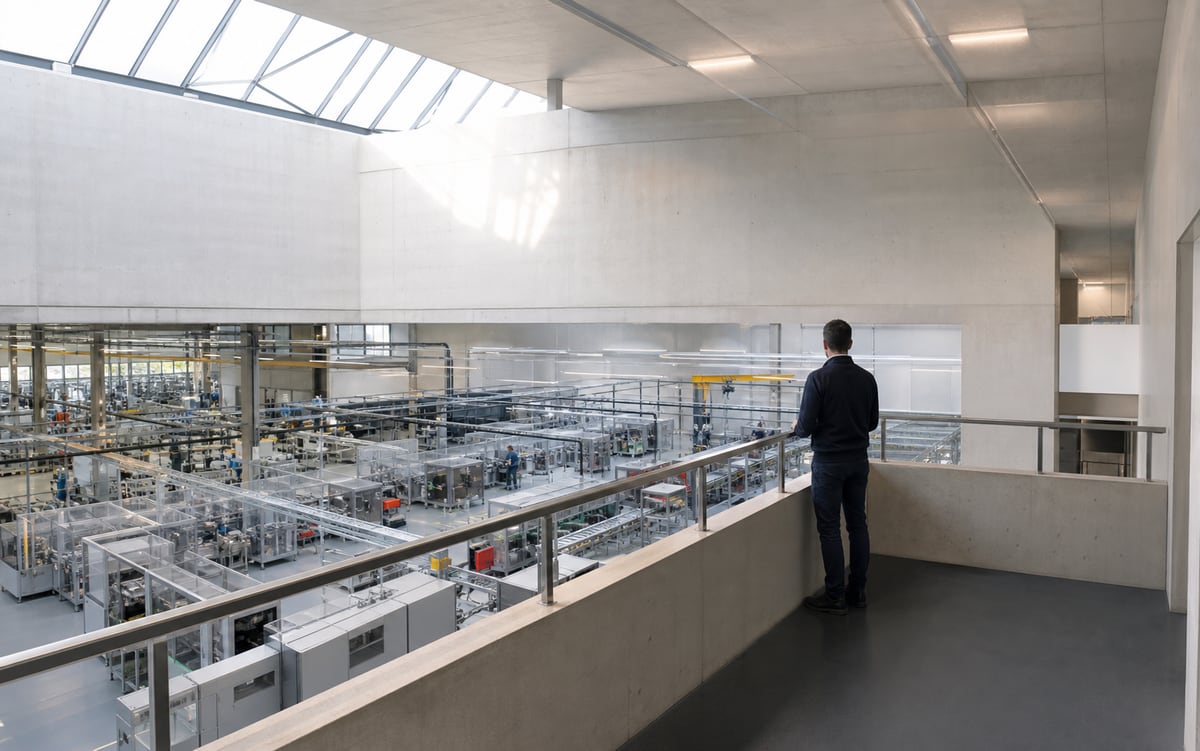
A specialist observes production from a bright factory mezzanine
Conceptual process visualization

Manufacturing-environment review. This is not an RBW client facility.

02

Verify the execution setting

The visit or audit format is defined in advance. Observations are recorded against the brief and agreed criteria.

A coordinate measuring probe checks a neutral metal component
Conceptual process visualization

Measurement control. The component is not an RBW client product.

03

Record quality status

Parameters, tolerances and the way deviations are handled are agreed before control so that the result can support a decision.

Risks and decisions

Every risk has a signal, a control point and an output.

Insufficient supplier information

Signal
Data cannot be compared against one criterion
Control point
Before recommendation
Client output
Open questions and the source behind each conclusion

Requirement mismatch

Signal
An observation differs from an agreed parameter
Control point
During production or control
Client output
A deviation record for decision

Unclear readiness for shipment

Signal
Quality or packaging status is not agreed
Control point
Before cargo handover
Client output
Readiness status and unresolved items

Unconfirmed logistics assumption

Signal
An option omits a cargo parameter or timeline
Control point
Before option selection
Client output
Comparable options and constraints
How the work proceeds

The process is organized around decisions and recorded outputs.

The actual scope, timeline and reporting format are agreed after the initial information is reviewed.

  1. 01

    Define the brief

    Product, mandatory parameters, target timeline and known constraints become a working brief.

    Output: agreed criteria
  2. 02

    Build the option field

    Potential manufacturers are reviewed through one structure, with information gaps made visible.

    Output: comparison sheet
  3. 03

    Verify what is applicable

    Verification depth and questions are defined against the brief and relevant risk.

    Output: observations and follow-up items
  4. 04

    Manage control points

    Production and quality findings are compared with the agreed parameters.

    Output: status and deviation register
  5. 05

    Prepare the handover

    Packaging, cargo readiness and logistics options are aligned before the next decision.

    Output: agreed next step
Cargo handover

Packaging and logistics converge at one handover point.

Before shipment, applicable inputs, readiness status and unresolved items are brought together here.

Packaging readiness

What is reviewed before cargo handover

  • Product protection requirements
  • Marking and package composition
  • Handling constraints
  • Unresolved items before release

Logistics-option readiness

What is required to compare options

  • Cargo profile and geography
  • Target timeline and acceptable trade-offs
  • Responsibility and handover points
  • Format of onward status updates
Responsibility

Responsibility is set before a stage begins.

Client

Provides inputs, confirms criteria and makes decisions at agreed control points.

RBW

Coordinates included stages, records open questions and transfers agreed information between participants.

Supply-chain participants

The role of manufacturers, inspectors and logistics providers is defined for the specific brief and contract.

The actual participants and geography are confirmed for the specific brief before the relevant stage begins.

In brief

Before work begins

Can one stage be engaged separately?

Yes. The service scope is defined after the brief is reviewed. Inputs, expected output and its connection to the wider chain should be agreed first.

Does RBW guarantee a specific result?

RBW does not claim a universal result guarantee. Responsibility, criteria and commercial conditions are defined for the specific brief and contract.

How is a manufacturer verified?

The format, questions and available forms of evidence are agreed before verification against the product and relevant risk.

How are timing and cost calculated?

After the product, geography, working scope, required stages and initial constraints are clarified.

What should we prepare for the first discussion?

A product description, mandatory requirements, target timing, known geography and the main current difficulties.

Next decision

Begin with the inputs, not a presentation.

Describe the product, brief and target timing. RBW will review the request, clarify missing information and propose the next applicable step.

Direct contactdkstas@ya.ru

A prepared draft will open in your e-mail application. You will need to confirm sending.

RBW uses these details only to respond to this request.